03 February 2019

WTF (What the fog!)

Week 04; 26 January 2019 - Al Abraq, Jahra Farm, Sulaibikhat Bay and Sharq Harbour

Paul Scott and I decided to try Al Abraq in the west again, even though the last visit was a little slow with few birds around. On the way, we hit heavy desert fog which made for a slow drive to the farm and it took at least another hour for the sun to burn through, so visibility was somewhat reduced to start. The Tamerisk trees were all glistening with the heavy dew on their branches and leaves

Dew


The few species we saw on our last visit, were still present. A few Common Chiffchaff's were seen and heard

Common Chiffchaff (Phylloscopus collybita)

The pair of European Stonechat's were still holding territory in the same field as the last visit. A few images of the female

Female European Stonechat (Saxicola rubicola)


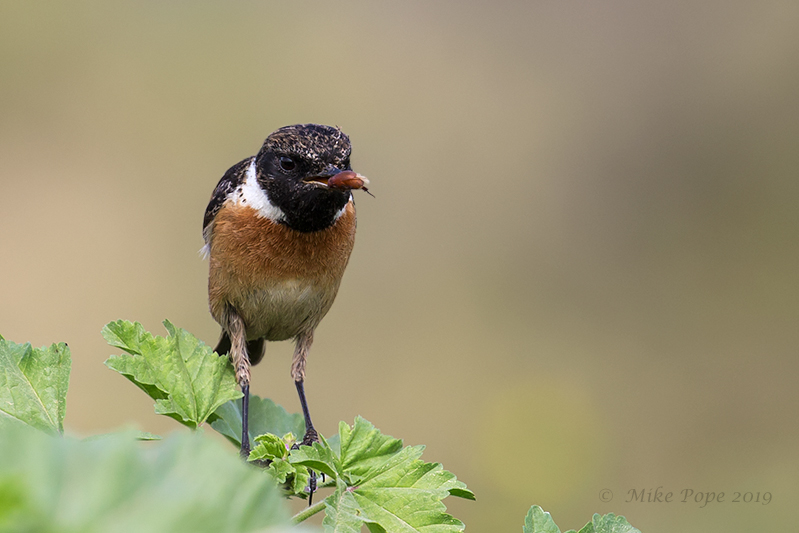
and the male
Male European Stonechat (Saxicola rubicola)


Other than that, not much else to be seen. Out theory is that following the record winter rains, there is so much suitable habitat across the desert that even the winter birds are dispersed.

Of course, if you were a botanist, this abundance of flora would be fascinating to study, as there are many different varieties adorning the desert.

Desert Flowers


One of the Hover Fly species 'drying' it's wings

Hoverfly sp.

We also watched a day old Camel calf still on wobbly legs, suckling from it's mother

Camel calf

Just as we were driving out, I caught a Sparrowhawk in my peripheral vision and we jumped out the car and managed to get a few BIF's pics as it circled above us, getting higher and higher.

Male Eurasian Sparrowhawk (Accipiter nisus)


We then headed back toward Kuwait, stopping at Jahra Farm. Here we found a small flock of Bank Myna's flying and calling around the farm - something seemed to have unsettled them. This image is not a composite, although it may appear to be so

Bank Myna (Acridotheres ginginianus)

Even Jahra Farm was quieter than usual, so we tried Sulaibikhat Bay, but the tide was still too far out. Cutting our losses, we made a last stop as Sharq Harbour in Kuwait City. Quite a number of Common Black-headed Gulls around the Dhow's in the harbour

Common Black-headed Gull (Chroicocephalus ridibundus)


A few larger Gulls also passed by overhead

Gull sp.

Gull sp.

As did Cormorants

Continental Great Cormorant (Phalacrocorax sinensis)

I saw a flash of blue dart across the water and land on the mooring rope of one of the Dhows - Common Kingfisher, an unexpected surprise in the City.

Common Kingfisher (Alcedo atthis)

Another slowish day all round, so the Kingfisher was a good bird to end it on. 

A beach stroll and a MEGA

Week 04; 25 January 2019 - Abu Hassania Beach and JPR

After an enjoyable game of tennis in the early morning, I decided to have a casual stroll along my local Abu Hassania beach, as the weather had warmed up a little and we had blue skies.

Many resident birds are common around the urban areas adjoining the beaches, here a Laughing Dove enjoying some shade.

Laughing Dove (Spilopelia senegalensis)

I walked along the beach, but as it was high tide, no waders to be seen, but there were a few Gull about. These two remained long enough to get an image, but then flew off with the rest of the flock

Heuglin's (Larus f. heuglini) and Steppe (Larus f. barabensis) Gull

I guess these are 1st year Gull's, but ID eludes me

Gull sp

Gull sp.

Surprisingly, there was a single Lesser Crested Tern, head-scratching as it flew off with the Gulls

Lesser Crested Tern (Sterna bengalensis)

The flower show continues following the excessive winter rain in December, so I explored the carpets of yellow Nowair flowers looking for invertebrates. The Painted Lady 'invasion' is still in full force and it is amazing how many of these butterflies are seen all around Kuwait.

Painted Lady (Vanessa cardui) in the bed of Nowair flowers


I also found a couple of Moths that were feeding from the flowers along with the butterflies. There is not much literature on Moths of Kuwait, so I haven't been able to ID these

Moth sp.

Moth sp.

I also flushed a couple of large Grasshoppers whilst walking around.

Grasshopper sp.

There was not much else to be seen, so I headed back to my apartment. I was just about to get out the car when we received a WhatsApp message from Abdulrahman who was leading a group of Irish and British birders - "Black-throated Diver at JPR, NOW!" This is a 1st for Kuwait and the GCC, so I just put my car into reverse and then headed directly to JPR.

The water crossing at the reserve was a bit too deep for my car, so I had to wait for Humoud and Aziz to arrive, so I could jump in their SUV to get down to the beach.

Whilst anxiously waiting, I checked out the Outfall, where there were good numbers of Black-crowned Night Heron

Black-crowned Night Heron (Nycticorax nycticorax)


As well as a couple of Continental Great Cormorants swimming/foraging in the Outfall

Continental Great Cormorant (Phalacrocorax sinensis)

Once Humoud and Aziz arrived, we headed to the beach where the visiting birders and Abdulrahman were still present. By now the Loon had drifted further out on the high tide and it took quite some effort to get scope views as it was continuously diving (as you would expect). Eventually we all got satisfactory views, but it was too distant for us to get any images. 

Black-throated Loon is a fantastic and quite bizarre record for the region, although I'm sure our visiting birders would have preferred to add a new tick to their list, rather than a bird that is relatively common where they come from. But having your names in the records for a National 1st, is also pretty good in my opinion.


26 January 2019

Slim pickings

Week 03; 19 January 2019 - Jahra Farm, Shallal Farm and Mutla'a Ranch

I decided to try a few of the local farms on what was a pretty cold day. For a change my first stop was Jahra Farms (normally it is the last stop and generally at the hottest and most unproductive part of the day). Generally it is quite an active site, especially with the resident birds - winter adds birds like Song Thrush (although not as many as last year).

Song Thrush (Turdus philomelos)


As well as Hypocolius - only one female bird today.

Female Hypocolius (Hypocolius ampelinus)

I was surprised to find two Barred Warblers though

Barred Warbler (Sylvia nisoria)


Not much else of interest, so I headed East to Al Shallal Farm which was 'dead' apart from a couple of Common Chiffchaff - these are the paler, greyer races that we haven't quite nailed down yet

Common Chiffchaff (Phylloscopus collybita)


The Painted Lady irruption is still evident in all locations, but following the rain many areas now have a kaleidoscope of yellow flowers which is a big attraction for these butterflies

Painted Lady (Vanessa cardui)

On route to Mutla'a Ranch, I made a detour into Jal Al Zour, finding my first Isabelline Wheatear of the year, along with an obliging Eastern Mourning Wheatear

Eastern Mourning Wheatear (Oenanthe lugens)


Mutla'a Ranch was next and it seriously was not worth the trip. Cutting my losses, I headed back south to Sharq Harbour (actually I needed to do some grocery shopping). There were a number of Gull species along the coast with the most prevalent being the Common Black-headed Gull

Common Black-headed Gull (Chroicocephalus ridibundus)


A single Slender-billed

Slender-billed Gull (Chroicocephalus genei)

and a few larger Gulls, with this Steppe Gull being the only one flying close enough.

Steppe Gull (Larus f. barabensis)

Overhead, rafts of Continental Great Cormorants headed to toward their roosting area near Doha Spur

Continental Great Cormorant (Phalacrocorax sinensis)


A bonus just before I left to do my shopping was a Great Black-headed Gull that came cruising effortlessly up the coast

Great Black-headed Gull (Leucophaeus ichthyaetus)

From Sharq Harbour, you can see the new causeway going across the Bay, this arch is one of the features close to Shuwaikh Harbour when the causeway starts from.

New Causeway from Shuwaikh


19 January 2019

A slow start to 2019

Week 02; 12 January 2019 - Al Abraq, Dairy Farm Pivots and Jahra Farm

The 2-weeks spent in South Africa for Christmas and New Year was most enjoyable; really great to see my family again, catch-up with friends, enjoy good food and wine and relishing the time in our own house after many years of having it rented. All too soon, it was time to head back to the desert....

The sunrise this morning while waiting for Paul Scott was reminiscent of a tropical island, but this was mid-winter Kuwait (and it was cold) - it was still spectacular.

Tropical Sunrise in Kuwait

We headed west to Al Abraq and stopping to photograph a few camels grazing in the desert just after sunrise. The desert is a fine carpet of 'green' following the unseasonable rains in December.

Post rain grazing


Birds take a lot longer to become active in winter, so for the first hour we were a little lost. Eventually we came across a pair of European Stonechat's that were still roosting in one of the fields.

Male European Stonechat (Saxicola rubicola)


Female European Stonechat (Saxicola rubicola)

As it warmed up, so the numerous Painted Lady butterflies became active - they were literally everywhere.

Painted Lady (Vanessa cardui)

We had a couple of other species, but really nothing out of the ordinary. We cut our losses and headed to the Dairy Farm Pivots, only to have it cloud over. No Skylarks, but there were a few Greater Short-toed and numerous Water Pipits.

Caucasian Water Pipit (Anthus s. coutelli)

Back toward Kuwait City and a detour to Jahra Farms, at least here there was a little more diversity. We had a pair of obliging Rose-ringed Parakeets feeding on fruit in one of the trees.

Rose-ringed Parakeet (Psittacula krameri)

I found Hypocolius for Paul, one of his 'wanted' birds

Hypocolius (Hypocolius ampelinus)

And most of the other regular resident's were also present.

Yesterday, Paul and I planned to have a fresh fish lunch at All Kout fish market. while we waited for them to open after Friday prayer, we found a place behind the market to check out the Gulls. Many of the adults have completed their moult's, so this made ID a little easier only one Caspian

Caspian Gull (Larus cachinnans)

A couple of Heuglin's

Heuglin's Gull (Larus f. heuglini)


And many 1st/2nd year birds that are still tough to separate (at least for me they are)

Gull - tbc

Gull - tbc

Gull - tbc

A couple of Continental Great Cormorants passed by..

Continental Great Cormorant (Phalacrocorax sinensis)

In the end, we didn't have our fish, as it was over a 2-hour waiting time to have it grilled - so that was a little disappointing. Next time we will be earlier.....