05 March 2019

Where are the migrants?

Week 09; 25 February 2019 - Al Abraq

Today was the long drive west to Al Abraq, the desert still has a fine carpet of green and this herder made for a good image just after sunrise

Herder in the 'green' desert

Once at the farm, the first bird I had was this really young Black-winged Kite. Not sure when it would have fledged as we are just coming out of winter?

Juvenile Black-winged Kite (Elanus caeruleus vociferus)


As it turned out, this was the bird of the day as other than an elusive Hume's Leaf Warbler and a couple of Chiffchaff, there were literally no other migrants around.

Again, I had to resort to spending time looking for butterflies amongst the flowers and these were more productive than the birds. Aside from the Painted Lady's which are still present all over Kuwait, I had a Clouded Yellow

Clouded Yellow (Colias croceus)

As well as Eastern Clouded Yellow

Eastern Clouded Yellow (Colias erate)

Along with Mediterranean Pierrot

Mediterranean Pierrot (Tarucus rosaceus)


and both male and female Brown Playboy's

Female Brown Playboy (Deudorix antalus)

Male Brown Playboy (Deudorix antalus)

There were a few moths, the highlight being a Striped Hawk-moth feeding on some flowers

Striped Hawk-moth (Hyles livornica)


and a possible Eastern Bordered Straw

Possible Eastern Bordered Straw (Heliothis nubigera)

There were quite a few 7-Spot Ladybird's in amongst the greenery. If you look carefully, this one has dislodged the pollen from the flower

7-Spot Ladybird (Coccinella 7-punctata)

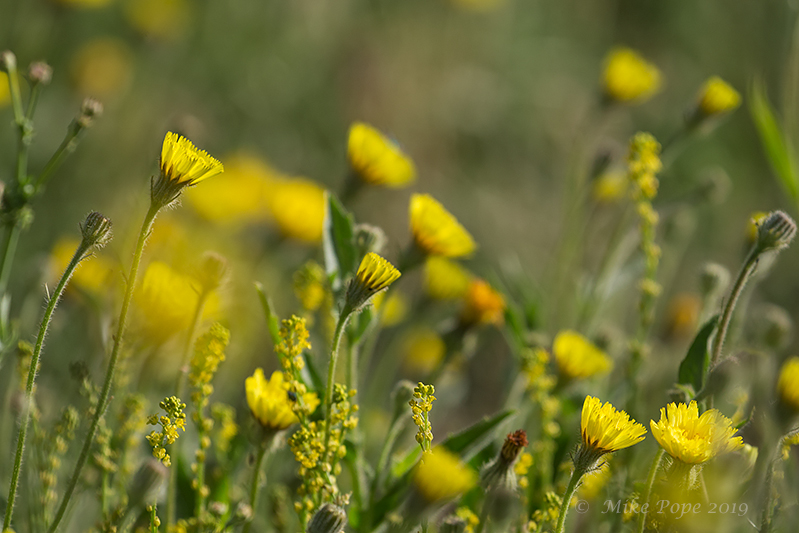
of course, flowers are still in full bloom


But I also found some parasitic Desert Hyacinth

Desert Hyacinth (Cistanche lutea)

and a trio of parasitic Red Thumb's before heading back home

Red Thumb (Cynomorium coccineum)


A naturalist day

Week 09; 24 February 2019 - Jahra Farm, Jal Al Zour, Liyah and Sulaibikhat

We had 3-days off for the National and Liberation Day holidays and for me it was best to escape the city and head to the tranquility of the desert.

I decided to start off at Jahra Farm which was quieter than expected. I had a pair of Bank Myna's on the wires

Bank Myna (Acridotheres ginginianus)

A single Song Thrush - the rest have probably departed by now

Song Thrush (Turdus philomelos)

and only one White Wagtail in one of the adjacent farms

White Wagtail (Motacilla alba)

Walking out, this Laughing Dove landed in front of me - sometimes you also need to stop and enjoy the common birds too....

Laughing Dove (Spilopelia senegalensis)

Next stop was Jal Al Zour before it got too busy with campers and quad bikers and I was suitably rewarded. First migrant was a distant Western Blue Rock Thrush high up on the wadi - encouraging.

Western Blue Rock Thrush (Monticola solitarius)

I checked the spot where I generally find Mourning Wheatear and there he was

Eastern Mourning Wheatear (Oenanthe lugens)


I spent some time watching him foraging on the ground and then on the slopes of the wadi. Whilst sitting quietly in my car, a female Finsch's Wheatear dropped in, but was very skittish

Finsch’s Wheatear (Oenanthe finschii)

I then found a male Desert Wheatear, not quiet in full breeding plumage - but obliging and singing

Male Desert Wheatear (Oenanthe deserti)


I then headed north and west to Liyah and found a good number of Wheatear's in one area; but a female Northern was the most obliging - she must have just arrived as she wasn't too keen to fly much

Northern Wheatear (Oenanthe oenanthe)


There were also a few Common Chiffchaff in one of the lone trees

Common Chiffchaff (Phylloscopus collybita

I explored deeper into the reserve looking unsuccessfully for Hoopoe-Lark, but I did finally find a flock of 3 Bar-tailed Lark. Difficult to approach and even more difficult to photograph in flight

Bar-tailed Lark (Limosa lapponica)


On the way out, a few Lesser Short-toed Lark were unexpected

Lesser Short-toed Lark (Alaudala rufescens)

Last stop on the way home was Sulaibikhat Bay, the tide was still a way out - so only managed a Grey Heron

Grey Heron (Ardea cinerea)

And some wintering Common Black-headed Gulls.

Common Black-headed Gull (Chroicocephalus ridibundus)


Spring migrants have not yet arrived in any significant numbers, but whilst out I also enjoy checking out the invertebrates. A Blister Beetle was the only creature of interest at Mutla'a Ranch

Blister Beetle (Mylabris calida)

Darkling Beetles were seen, although this one seemed to be on steroids - I have never seen one move this quick before

Darkling Beetle sp.

Many green Fly types

Fly sp

A Wasp species

Wasp sp

and a few Moths that I'm unsure of the identify, but have taken a 

Possible Nomophila noctuella

Possible Nomophila noctuella

Possible Eastern Bordered Straw (Heliothis nubigera)

The flower show continues and it is actually quite amazing how green and colourful the desert is in areas that are protected. Following the record rains in December, I'm sure there are plant species that haven't been seen in many years - so it could be a Botanist's dream. Enjoy the Kuwait flower show