This was the 2nd Global Big Day organised by eBird for 2019; the first was in May for spring migration (Kuwait recorded 126 species) and the second in October for autumn migration. The October date was a little late for the Middle East, as most passerine migrants have already passed through. Nevertheless, it is a fun day and this year we had a coordinated effort with a small and enthusiastic group of birders to cover as many of the key locations in Kuwait as possible. We kept in contact through our Whats App Group, so it was encouraging and exciting to see the species being recorded as the day progressed, plus we were fortunate to have good weather for the whole day.
Our goal was to finish as the top participating country in the GCC.
A few of us started at Pivot Fields just after sunrise and its amazing that covering one location there were species recorded that not all of us saw - so it was a good tactic to maximize the coverage.
There were still a couple of Isabelline Wheatear's present
 |
| Isabelline Wheatear (Oenanthe isabellina) |
As well as a single European Roller
 |
| European Roller (Coracias garrulus) |
I spent a bit of time at the marsh, where I had Red-spotted Bluethroat
 |
| Red-spotted Bluethroat (Luscinia svecica) |
One of the few Daurian Shrike
 |
| Daurian Shrike (Lanius isabellinus) |
and a probable Armenian Stonechat in the reeds
 |
| Armenian Stonechat (Saxicola m. variegatus) |
It is a good spot for waders and I managed to add a few that weren't seen elsewhere during the day; Wood Sandpiper
 |
| Wood Sandpiper (Tringa glareola) |
Here a Spotted Redshank leading a flock of Marsh Sandpipers
 |
| Spotted Redshank (Tringa erythropus) and Marsh Sandpiper (Tringa stagnatilis) |
There were numbers of Common Snipe (although I'm still searching intently for Pin-tailed)
 |
| Common Snipe (Gallinago gallinago) |

Surprisingly, the numbers of Blue-cheeked Bee-eaters are still high - many were catching Dragonflies over the marsh. If they pass by close enough, you can hear when they make contact with a dragonfly or bee mid-air!
The last view a Dragonfly has before it becomes lunch
 |
| Blue-cheeked Bee-eater (Merops persicus) |
A few Pallid Swifts joined the Barn Swallows overhead
 |
| Pallid Swift (Apus pallidus) |
Another surprise was a small flock of mixed ducks; 4 Garganey
 |
| Garganey (Anas querquedula) |

with a single Northern Pintail
 |
| Northern Pintail (Anas acuta) |


and later some Mallard
 |
| Mallard (Anas platyrhynchos) |
Two White-tailed Lapwing were flushed by a passing Harrier
 |
| White-tailed Lapwing (Vanellus leucurus) |
As it warmed up, so the raptors became more active - this location has many Black/Eastern Kites
 |
| Black Kite (Milvus migrans) |


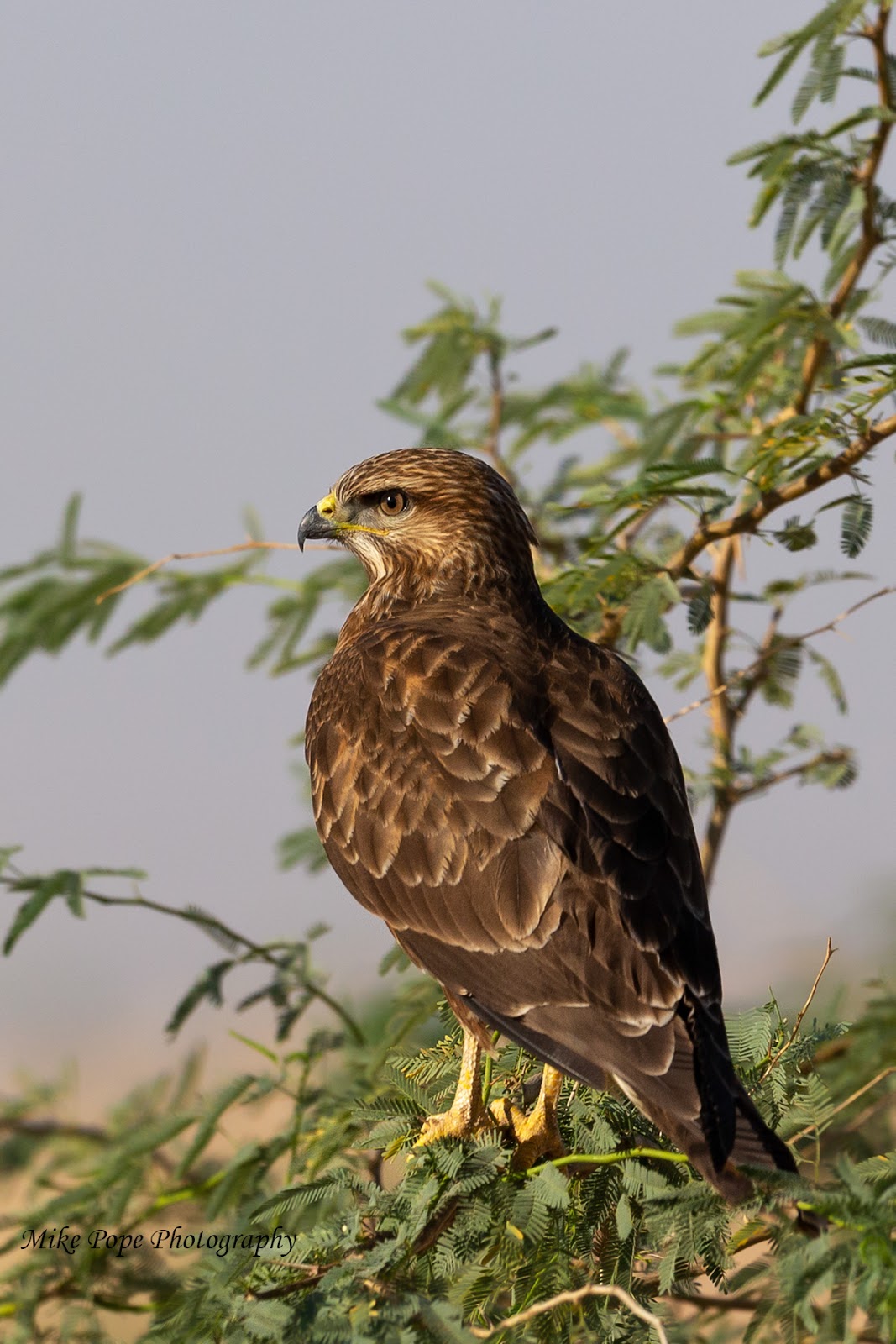
And there are not many other locations where you can get all 3, okay 3.5 large brown eagles (fulvescens Greater Spotted is almost like another species) in a single day. The Eastern Imperial passed by quite high overhead
 |
| Eastern Imperial Eagle (Aquila heliaca) |
The Steppe Eagle departed before I could get close, but the cracking fulvescens lingered a little longer
 |
| Greater Spotted Eagle (Aquila clanga fulvescens) |

Here is the regular Greater Spotted for comparison
 |
| Greater Spotted Eagle (Aquila clanga) |


The highlight for me and Kuwait was finding the 3 Sociable Lapwings in the flock of Northern Lapwings. They did keep their distance and were flushed a few times, as this flock is really skittish. This critically endangered species was also recorded in Spain on the day
 |
| Sociable Lapwing (Vanellus gregarius) together with Northern Lapwing (Vanellus vanellus) |
 |
| Distinctive in flight |


Whilst watching the Lapwings, a Black-winged Pratincole dropped in for a drink - the only one we recorded today
 |
| Black-winged Pratincole (Glareola nordmanni) |
 |
| White Wagtail (Motacilla alba) |
As has Western Cattle Egret's which follow the moving pivots catching insects and enjoying the fine spray to keep cool
 |
| Western Cattle Egret (Bubulcus ibis) |
By now it was mid-morning and warming up, time to hit a few other sites - so I went to Al Shallal Farm which was not worth the trip. Stopped at Jahra Farm and got a few species, hit McDonald's for lunch and continued south to Souk Sharq for a few Terns and Gulls and our first Greater Continental Cormorant for the winter.
I needed to get the the Free Trade Zone for House Crow - it turned out to be nightmare in the grid-locked traffic around the port - but finally I was able to get through it and find the House Crow (only on a big day like today!)
I then spent the last hour at Sulaibikhat Bay as the high tide was receding, the sun behind me and no wind - perfect way to end the day. Here I recorded some more Gulls and Terns; Gull-billed
 |
| Gull-billed Tern (Gelochelidon nilotica) |
and Whiskered
 |
| Whiskered Tern (Chlidonias hybrida) |

Along with the larger wading birds; Flamingo's, Grey Herons and many Western Reef Heron's
 |
| Western Reef Heron (Egretta g. schistacea) - balancing act! |

 |
| Beat it |
There was a huge flock of mixed waders; Dunlin, Curlew and Broad-billed Sandpiper, Redshank, Lesser and Greater Sand Plovers, Grey Plover, Curlew's, Black and Bar-tailed Godwit's - just a pleasure to enjoy
 |
| Common Redshank (Tringa totanus) |
 |
| Curlew Sandpiper (Calidris ferruginea) |
 |
| Dunlin (Calidris alpina) |
 |
| Greater Sand Plover (Anarhynchus leschenaultii) |
A passing Western Marsh Harrier put up all the smaller waders
 |
| Assorted Waders put up by the Marsh Harrier |
 |
| Western Marsh Harrier (Circus aeruginosus) |

Of course the highlight at this site is Crab-plover and there were good numbers to be seen.
 |
| Crab-plover (Dromas ardeola) |


As the tide receded, so the Mudskipper's appeared and it was quite entertaining watching the interaction between territorial Boleophthalmus dussumieri
 |
| Boleophthalmus dussumieri |


By now the sun had dipped below the horizon and we were able to reflect on the day. A few of us pushed from dawn to dusk which contributed to the count of the whole team. We were only able to see the final results after a few days we we surpassed our expectations and recorded 156 species. Personally I recorded 92 species (I was hoping to break 100), but was still happy. We also met the objective we set ourselves of finishing ahead of other participating GCC countries, with UAE a close 2nd to Kuwait.
We look forward to the next Big Day and will try and achieve or better our autumn count.