12 July 2014

Independence Day Birding

Week 27 - 04 July 2014 - Jahra East to Sulaibikhat

Yes, I know it is still mid-summer and the ambient temps are brutal and there shouldn't be any birds about. But as us birders know, there is always something to be seen if you make the effort, irrespective of the environmental conditions.

So it was that my alarm went off at 4am and I headed to Jahra East Outfall which is an unprotected and public site and therefore no restrictions apply or permits required to enjoying some birding. Driving to the outfall before sunrise, I found an Arabian Red Fox on the perimeter of the new suburb that is built almost on top of Jahra East. I had no time to check the settings as it was running away from me, but I quite like the unintended 'motion' image.


Arabian Red Fox (Vulpes vulpes arabica) scavenging in the pre-dawn
Once at the outfall which I had all to myself I enjoyed the pre-dawn tranquility (the smell aside) and watched the sun rise in the east.


Jahra East Sunrise
It wasn't too long after that when the local herder arrived with his flock to let them graze on the small patch of green grass before it got too hot


Bhaa - coming through..
Waiting for the reed birds to awaken, I saw many (more than I have ever seen before) black rats foraging and going through their morning cleaning routines on the banks at the base of the reeds. I'm sure these are responsible for the loss of many reed dwelling and nesting birds. There are reports that the number of Rats are increasing at an alarming rate in the city and parks, probably attracted by the litter that people are generally to lazy to pick up after their festivities. A potential epidemic waiting in the wings?


Black/Norwegian Rat
Soon the Caspian/Eurasian Reed Warblers (which breed in these reeds in the summer) started calling - but they are notoriously difficult to photograph as they are always on the move.


Caspian Reed Warbler (Acrocephalus s. fuscus)
A small flock of Black-winged Stilts passed by overhead.


Juvenile Black-winged Stilt (Himantopus himantopus)
Another grayer and a slightly larger Warbler caught my eye, this one swaying and fanning its tail - Upchers and quite unusual in this reed habitat


Upchers Warbler (Hippolais languida)


I walked along the outfall until it reached the sea and scanned the birds feeding and foraging on the low-tide zone.

A Little Tern flew up the outfall


Little Tern (Sternula albifrons)
In the distance, I found the adult Black Tern (that had been seen a week ago) feeding in a mixed flock of Terns. I quite like this image as gives an idea of the setting across the northern Arabian Gulf with Jal Al Zor escarpment as a backdrop. I had to pre-focus to try and get the flying bird in focus - which took quite some time.


Black Tern (Chlidonias niger)
Walking back to the car some Hirundines were now hawking above the channel - Barn Swallows and Sand Martin

Sand Martin (Riparia riparia)
These were joined by Common House Martin, one which was an obvious adult

Adult Common House Martin (Delichon urbicum)


But the other caused some consternation as it was flying with the adult, but the plumage was completely off; other than the broad white rump (typical of House Martin). In the end I assumed that it is probably an oiled bird, although the oiling still seems too diffuse - if any has a different opinion, please do let me know.

Oiled juvenile Common House Martin (Delichon urbicum)?


The birds became less active and quieter as the temps rocketed upwards, so I headed to Sulaibikhat Bay for the low tide. Here I set myself up low down on the beach sitting on an old tyre and my big glass on a monopod. There are two species of Mudskipper that are abundant in this area and enjoyed their antics for around 45-minutes - sweat running down my face and back, but entertained nevertheless.

The biggest of the two is Boleophthalmus dussumieri and if not relaxing around their burrow, were either defending their territories or showing off.

Territorial Boleophthalmus dussumieri


Squaring off
The smaller of the two is Periophthalmus waltoni and in sunlight seems to have astonishing aqua coloured eyes.

Periophthalmus waltoni, check the eyes!


Later I noticed a few large Crabs foraging in the literal zone that we suspect is Macrophthalmus dentipes. These crabs were oblivious to the Mudskippers and seem to happily co-exist. But when they crossed into a burrow of dussumieri they seemed to cross an imaginary line and the entertainment began. Initially there appeared to be some indignation from dussumieri followed by some posturing. When this had no effect on the crab, more forceful action was required, so the dussumeiri slithered into the pool and 'leaned' on the crab - still no effect! Eventually, using it's full body it appeared to make itself as long and big as possible behind the crab who then slowly and at its own pace moved out of the offending pool.

Interaction between Boleophthalmus dussumieri and Macrophthalmus dentipes


By now I was a little parched myself and was also tempted to share the pool, but retreated a little further south to another outfall. Here I found a Black-tailed Godwit resplendent in breeding plumage

Black-tailed Godwit (Limosa limosa)
A flock or around 30 Greater Flamingo which are way more common in winter

Greater Flamingo (Phoenicopterus roseus)
and a lone Gull that possibly over-summered, I suspect this is a Steppe?

Possible Steppe Gull (Larus f. barabensis)
Along with a few juvenile Gull-billed Terns feeding off stuff floating out of the outfall - quite disgusting!

Juvenile Gull-billed Tern (Gelochelidon nilotica)
A House Sparrow also joined in on the action and manage to secure himself one of the large cricket like insects that get washed out from the outfall. Strange to see a seed eater devouring a big chunk of protein 'meat'

Male House Sparrow (Passer domesticus) with a protein based meal
Last stop of the day was Souk Sharq where the amount of young fish along the breakwater was astounding.

Shoaling fingerlings (not sure of sp)
I was really surprised that the Terns weren't hammering these fish, but something in the water was - with big splashes and fish jumping everywhere

Escaping danger from below
Not sure if it was one of these guys, but he didn't seem big enough?

One of the bigger fish on the fringes
Overhead the only Terns seen were Lesser Crested

Lesser Crested Tern (Sterna bengalensis)
and a Sandwich that was also 'panting' in the heat

Sandwich Tern (Sterna sandvicensis)
By now I had to get home to some shade and hydration - but a good day out with some interesting diversity


05 July 2014

Finally some birds!

Week 25, 21 June 2014 - Sabah Al Ahmad Sea City

My backlog is almost caught up...

After the visit to the south earlier in the month, I didn't expect much on today's visit as the heat hasn't abated.

On the boat, we spent some time off-shore around Mina Al Zour checking for sea birds.

Although breeding is still in progress on the off-shore islands, I found numbers of Lesser Crested Terns on the off-shore buoys

Lesser Crested Tern (Sterna bengalensis)


With smaller number of 1st year White-cheeked Terns amongst them

1st year White-cheeked Tern (Chlidonias leucopterus)
The number of Socotra Cormorants which are summer visitors to Kuwait had also increased and I was pleased to see one adult amongst the 1st year birds

Adult Socotra Cormorant (Phalacrocorax nigrogularis)


1st year Socotra Cormorant (Phalacrocorax nigrogularis)
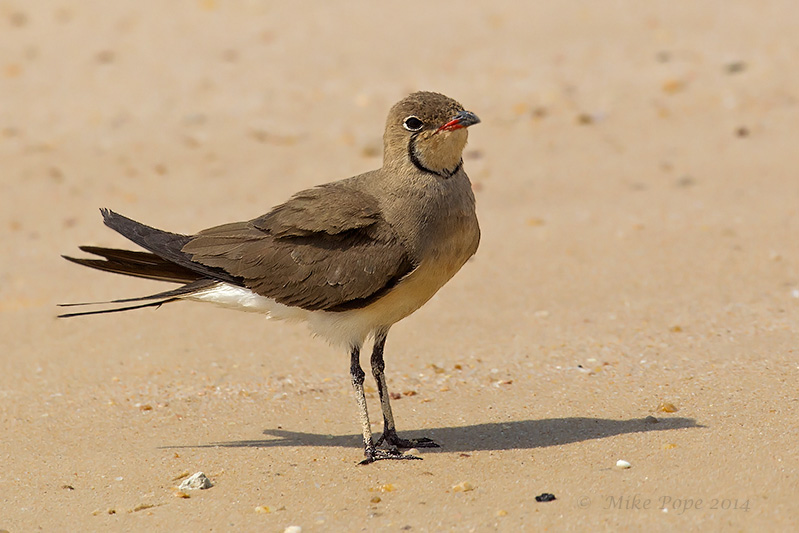
On the way through the project I found a single Collared Pratincole on the beach

Collared Pratincole (Glareola pratincola)

Showing all the id features in flight
Back on land, a single Blue Pansy butterfly was found in an area with desert vegetation

Blue Pansy (Junonia orithya)
Also seen was my friend the Blue-throated Agamid in the same area that I found him earlier in the month

Blue-throated Agamid


On the coast south of Khiran town, I came across a flock of 20+ Greater Sand Plovers with a few sporting breeding plumage (already!)

Greater Sand Plover (Charadrius leschenaultii)
Also seen were many Metapograpsus Messor crabs in the rocks

Metapograpsus Messor
Ghost Crab towers are a good sign of a healthy beach environment and there were many along this stretch of beach

Ghost Crab Towers


Mission accomplished

Week 24, 13 July 14 - Jahra East Outfall

At last a visit to a different site...

Neil Tovey, an experienced birder from UAE has recently re-located to Kuwait and it was great to finally meet him and spend a morning birding together.

We decided to check on the Warblers at Jahra East Outfall, specifically looking for Basra..

We arrived just on sunrise which is 04h50 in the morning and it took longer than we thought before the dawn chorus started - it was pretty pathetic by South African standards, I must admit. Nevertheless we walked and checked the reeds along the outfall (it sounds exotic, but it is a dirty water outfall - meaning sewage)

There were Caspian Reed Warblers aplenty as these breed here in the summer

Breeding Caspian Reed Warbler (Acrocephalus s. fuscus)


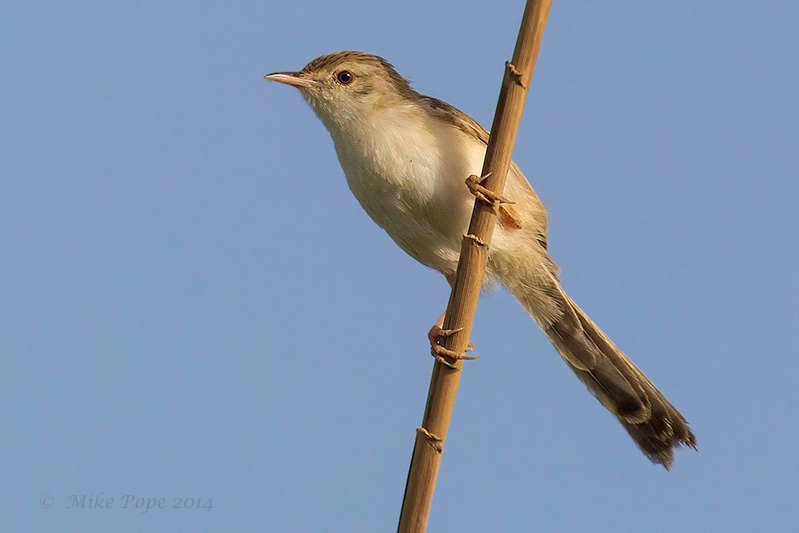
As do Graceful Prinia's

Graceful Prinia (Prinia gracilis)
But no big Acro's to be found anywhere (normally Indian Reed is present).

Finally as we decided to leave we heard a call that was different to the others we had heard all morning - low and behold a Basra flew out of some dense reed cover to chase another warbler before disappearing into cover - no image, but mission accomplished

Into thin air

Week 23, 07 June 14 - Sabah Al Ahmad Sea City

We are well and truly into summer now where the heat just sucks the moisture out of your body.

As usual, it was back to the Sea City project and today the birds really appeared to have vanished into thin air..

Just a single Crested Lark and yours truly were out in the baking sun...amazingly it was able to still maintain an upright crest

Crested Lark (Galerida cristata)
In fact, it was so hot today walking the islands it became almost impossible to actually hold my camera

Since there were literally no birds and before I wilted, I checked what else was mad enough to be out and exposed to the sun..

A new butterfly species for me and one I hadn't seen in Kuwait before was a Mediterranean Pierrot

Mediterranean Pierrot (Tarucus rosacea)
Of course, my little Western Pygmy Blue's were still around and how they don't get fried crispy by the sun beats me.

Western Pygmy Blue (Brephidium exilis)
A Short-horned Grasshopper made a dash across the sand to some shade

Short-horned Grasshopper
As did this Dragonfly species

Dragonfly sp
But these Bembix priesneri's (a sphecid wasp species) seemed quite comfortable on the burning sand - furiously digging little burrows looking for food I assume

Bembix priesneri

I'm out of here too!

Summer heat

Week 21, 24 May 2014 - Sabah Al Ahmad Sea City

Summer is quickly approaching and the temps are starting to sear on the back of the thermo-oven wind!

Again, I was back in the south, as the two other main sites (JPR and SAANR) are still off-limits. Birds were very thin on the ground today with only a distant Little Tern


Little Tern (Sternula albifrons)
But a very obliging 1st year Socotra Cormorant that allowed very close approach, so much so that I could only manage a portrait.


1st year Socotra Cormorant (Phalacrocorax nigrogularis)
When birds are scarce, I search for other species...

On the coast I found two species of crab; the first is Macropthalmus Depressus and these are typical of inter-tidal flats


Macropthalmus depressus
The second and more shy is found in the rocks and structure on the beach and is called Metapograpsus Messor


Metapograpsus messor
Plain Tiger butterfly is uncommon in Kuwait


Plain Tiger (Danaus chrysippus)


The hot summer is generally the best time to find the resident Blue-throated Agamid. This one perplexed me, as it chose to stand on a mound of black stone instead of the expected light desert rock. If you look carefully, you will see that it has curled up it's toes so that they don't touch the hotter black stones..


Blue-throated Agamid


A smattering of migrants

Week 19, 10 May 2014 - Sabah Al Ahmad Sea City

The spring migration starts tapering off in May, so any migrants seen are still a bonus.

I was back down in the south at the impressive Sea City Project and spent some time on the water and walking the islands.

Today the islands were the most productive and I enjoyed picking up some of the tail-end migrants.

Shrikes are still passing through and I had Lesser Grey

Lesser Grey Shrike (Lanius minor)


Red-backed

Red-backed Shrike (Lanius collurio)
and Turkestan (this species was more prevalent this migration than Daurian)

Turkestan Shrike (Lanius phoenicuroides)
A few Spotted Flycatchers were also present where the habitat was a little more dense. This is my favourite image of the day

Spotted Flycatcher (Muscicapa striata)
A shadow moving quickly on the ground alerted me to look up - Eurasian Hobby, a first for the project checklist and also made me appreciate the AI focus of the 1DM4 even with a 1,4 extender on the big glass!

Eurasian Hobby (Falco subbuteo) having just plucked some prey; see the feathers on it's bill


Common Whitethroat

Common Whitethroat (Sylvia communis)
and Lesser Whitethroat were seen

Lesser Whitethroat (Sylvia curruca)
A male Common Rock Thrush was an unexpected surprise and a bird that I just sat an enjoyed as it fed on a beetle.

Male Common Rock Thrush (Monticola saxatilis)


The tiny Western Pygmy Blue butterflies were still present, this is a new species of butterfly that I have discovered for Kuwait.

Western Pygmy Blue (Brephidium exilis)
Heading back to the mainland, a Western Osprey was another surprise this late in the year. This bird was feeding on a fish on the beach and took flight even though we kept our distance.

Western Osprey (Pandion haliaetus)