02 March 2016

2-days with Dr. Matthew Binn - Day 2

Week 44, 31 October 2015 - Al Abraq, Jal Al Zour and Jahra

Last night we agreed on an earlier pickup for the long drive west to the oasis farm of Al Abraq.

We arrived just after sunrise and had some glorious and soft golden early morning light. We were fortunate to find a few cooperative birds with the sun behind us. There were quite a few European Stonechat's, primarily males, but also the odd female.


Female European Stonechat (Saxicola rubicola)

Male European Stonechat (Saxicola rubicola)


Another female Ménétriés’s Warbler, but in way better light


Female Ménétriés’s Warbler (Sylvia mystacea)
Followed soon after by a 1st year Red-backed Shrike that found some protein in the crops


Red-backed Shrike (Lanius collurio)

What a difference the light direction makes; Red-backed Shrike (Lanius collurio)
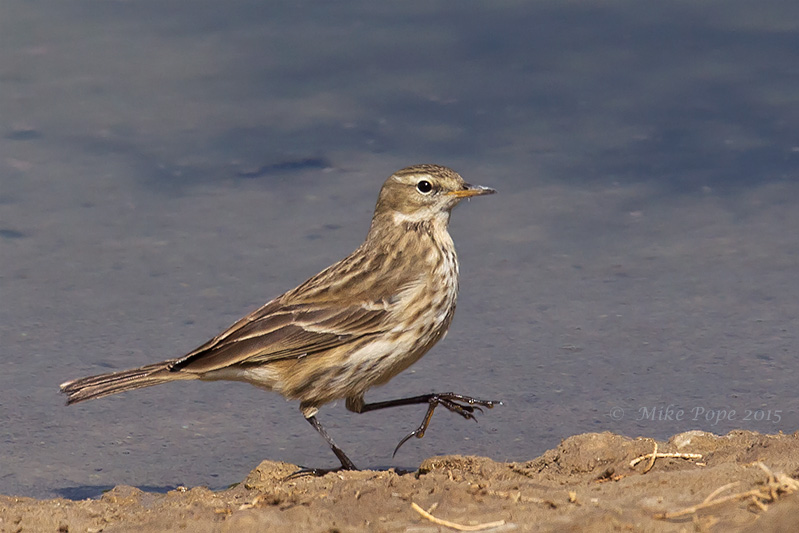
A few Water Pipit dropped out of the sky to forage in the fields


Water Pipit (Anthus spinoletta)
We moved on from the field of crops, finding Willow Warbler


Willow Warbler (Phylloscopus trochilus)

Willow Warbler (Phylloscopus trochilus)
and then Spotted Flycatcher


Spotted Flycatcher (Muscicapa striata)
In the olive tree grove, a Red-breasted Flycatcher played hide and seek with us and neither of us was able to get any decent images


Red-breasted Flycatcher (Ficedula parva)
By now, the clouds had rolled in and the light faded as we were trying to photograph a few White and Western Yellow Wagtails


This may be the nominate Blue-headed Wagtail (Motacilla flava flava)
As we were about to leave, I got onto a small raptor passage high above us - mostly Steppe Eagles


Steppe Eagle (Aquila nipalensis)

But also a few Eastern Imperial Eagles..

Eastern Imperial Eagle (Aquila heliaca)

Adult Eastern Imperial Eagle (Aquila heliaca)
The last bird on the way out was a singing Corn Bunting


Corn Bunting (Emberiza calandra)
From Abraq we headed to Jal Al Zour to try for some Wheatear species; we weren't disappointed, as I found Pied


Pied Wheatear (Oenanthe pleschanka)
Eastern Mourning


Eastern Mourning Wheatear (Oenanthe lugens)
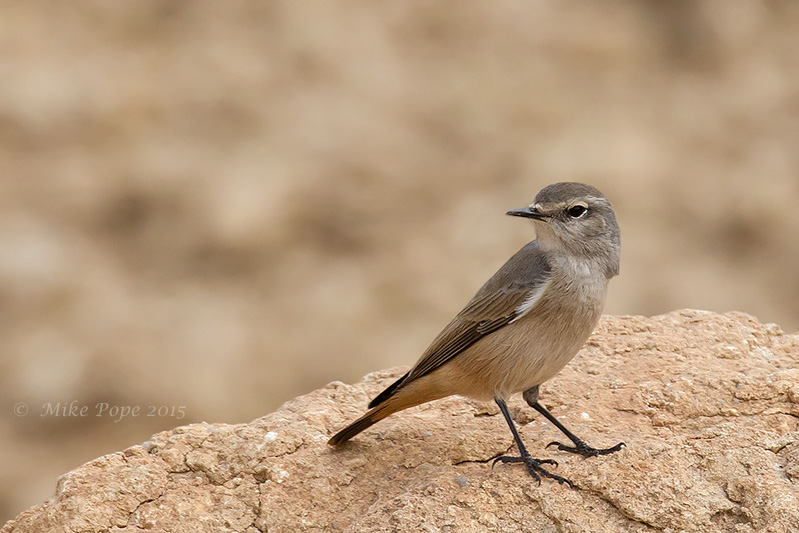
and the main prize, Red-tailed


Wintering Red-tailed Wheatear (Oenanthe chrysopygia)


A quick stop a Jahra Farm produced a few aerial Blue-cheeked Bee-eaters


Blue-cheeked Bee-eater (Merops persicus)


From the Farm it was a short hop across the freeway to Jahra Pools where we spent the rest of the afternoon, in sun shine and then rain believe it or not.

A few more Blue-cheeked Bee-eaters, but these roosting on a dead tree in great light.


Blue-cheeked Bee-eater (Merops persicus)
We found the Bonelli's again, this time in perfect position, roosting in a tree and then flying off and right past us - my best sighting ever!


Bonelli's Eagle (Aquila fasciatus)


At the Pools, we had a few Daurian Shrike - another new species for Matthew


Daurian Shrike (Lanius isabellinus)
In and around the waterways, the iridescent Grey-headed Swamphen


Grey-headed Swamphen (Porphyrio  p. poliocephalus)
Indian Reed Warblers


Indian Reed Warbler (Acrocephalus s. brunnescens)
And a fantastic Mountain Chiffchaff - a species I had not connected with for quite some time


Mountain Chiffchaff (Phylloscopus sindianus)


We tried the spot where Reed Bunting had been seen earlier in the week, but only found Common Kingfisher


Common Kingfisher (Alcedo atthis)
As the end of day approached, the light was starting to fade and that's when we found a small flock of waders that had one bird that got us pretty excited. Unfortunately, it turned out to be an oiled Temminck’s Stint.


The oiled Temminck’s Stint (Calidris temminckii) that got us a excited

A typical Temminck’s Stint (Calidris temminckii)
While we were watching and photographing the Stints, a winter plumage Spotted Redshank dropped in - bonus!


Winter plumage Spotted Redshank (Tringa erythropus)
By now it was time to leave, but we did stop for this Pied Kingfisher for the last image of the day.


Male Pied Kingfisher (Ceryle rudis)
I really enjoyed a great 2-days with Matthew from which we departed as friends. He was able to photograph many more new species than expected, for which I was really pleased.  


2-days with Dr. Matthew Binn - Day 1

Week 44, 30 October 2015 - Sulaibikhat and Jahra

At the end of 2015, my resolution was not not fall back into a processing and posting backlog - well here we are in March, and I have done exactly that!

In late October, I had the pleasure of guiding Matthew Binn for 2-days and this was guiding with a difference. Matthew's brief was to get great photographs of as many new species as possible, over the 2-days.

Unfortunately, the weather for the first day was inclement and cloudy to start when we arrived at the Sulaibikhat, to check out the Gulls feeding in and around the outfall. There were masses of Common Black-headed Gulls, interspersed with lesser numbers of Slender-billed and a few large white-headed Gulls. Some of which were quite challenging to ID....


Slender-billed Gull (Chroicocephalus genei)

For comparative purposes, a Common Black-headed Gull (Chroicocephalus ridibundus) in an almost identical pose

Foraging Common Black-headed Gull (Chroicocephalus ridibundus)


I suspect this brute is a possible Caspian Gull (Larus cachinnans)

I'm unsure of  the ID of this pale-eyed Gull with light grey upperparts
Above the foraging Gulls, there were a few Tern species in non-breeding plumage - Whiskered


Whiskered Tern (Chlidonias hybrida)
And White-cheeked


White-cheeked Tern (Chlidonias leucopterus)
With not much more to be seen, we headed to Jahra Pools Reserve, where we spent most of the day, with the sun making an effort to burn through the cloud on a few occasions.

Matthew got on to a number of new species, the first was a female Ménétriés’s Warbler that provided a photographic challenge in the low light, as it popped in and out of a shrub it was foraging in.


Female Ménétriés’s Warbler (Sylvia mystacea)
Not much further along, we had this roosting Greater Spotted Eagle, but against the light and there wasn't much we could do to get into a better position


Greater Spotted Eagle (Clanga clanga)
Driving around the reserve, Matthew asked if there was a chance for Citrine Wagtail, just as I got my bins onto one feeding on the edge of a small pool!


Citrine Wagtail (Motacilla citreola)
A female Stonechat proved to be a challenge and didn't turn around once. I suspect it is European, as there appears to be some subtle streaks on the rump.


Probable female European Stonechat (Saxicola rubicola)
There were loads of Common Chiffchaff feeding and foraging in the Phragmite Reeds around the pools


Common Chiffchaff (Phylloscopus collybita)


Before lunch, we had a few Black-eared Kites fly up from one of the pools where they had landed to drink


Black-eared Kite (Milvus m. lineatus)


We had a lunch break and a quick stop at Jahra Farms where we got onto a few more new species; a Red-spotted Bluethroat that Matthew enjoyed and a pair of Eurasian Blackcap's


Female Eurasian Blackcap (Sylvia atricapilla)
Back to Jahra Pools, where a Common Kestrel passed by quickly.


Common Kestrel (Falco tinnunculus)
A Bonelli's Eagle had been present a few days back and when I picked up a medium sized raptor flying low over the reeds in the distance, I thought to myself that must be it. It never did come close, but when it gained some elevation, I could confirm it was indeed the Bonelli's


A distant Bonelli's Eagle (Aquila fasciatus)
There wasn't too much of interest on the pools themselves, other than this male Common Pochard, that appeared to be injured.


Male Common Pochard (Aythya ferina)
Also quite a few Western Marsh Harriers about, these 2 seemed to have some sort of aerial dispute.

Western Marsh Harrier (Circus aeruginosus)

During October, we had somewhat of a Pied Kingfisher eruption - not just in Kuwait, but seemingly across the Region. We found a spot in the reserve, where there must have been over 10 birds sitting on the causeway bridge, waiting for the right opportunity to dive onto a unsuspecting fish. I must say, their success rate was pretty good and we enjoyed a good 30-minutes enjoying their antics.


A clique of Pied Kingfishers (Ceryle rudis)

Female Pied Kingfishers (Ceryle rudis)

Male Pied Kingfishers (Ceryle rudis)

Successful catch - now to beat it to death....


The last bird of the day in the fading light was a good one; pity we had to push the ISO to get a half decent image of a White-tailed Lapwing


White-tailed Lapwing (Vanellus leucurus)
We had a great first day, lots in common and with a number of photographic firsts for Matthew, so that was really satisfying. 


08 December 2015

Early Winter Visitors have arrived

Week 43, 24 October 2015 - Sabah Al Ahmad Sea City

I was back in the south of Kuwait and enjoyed my Mac breakfast just after sunrise.

I almost dropped my coffee as a Short-eared Owl flew in front of my car and only managed a quick 'grab' shot as it dropped behind some Sabkha against the sun. Unfortunately, it only stayed a minute before it was off again, so I didnt have any chance to get any closer. A great record for the south..


Short-eared Owl (Asio flammeus)
The first winter visitors have arrived; White Wagtail amongst a few Yellows


White Wagtail (Motacilla alba)
And Water Pipit


Water Pipit (Anthus spinoletta)
A resident pale form Western Reef Heron was foraging in some shallow ground water


Western Reef Heron (Egretta g. schistacea)
A single female Pied Wheatear was seen briefly


Pied Wheatear (Oenanthe pleschanka)
A Mallard was unexpected this far south


Mallard (Anas platyrhynchos)
From the boat, a few Lesser Crested Terns were still present, but the bulk appears to have departed


Lesser Crested Tern (Sterna bengalensis)
I came across a few Gulls that appeared to have their bills taped shut - so their lives were cut short, as they would slowly starve to death. Apparently, this is done by falconers who use Gulls as prey when training their Falcons. The Gull's bills are taped shut, so as not to let the Gulls bite and peck the Falcons and cause any injury - never mind the misery and eventual death that will come to the Gulls. Very disappointing and sad!


Destined to die

And this Gull
This Heuglin's was more fortunate and had everything in tact


Heuglin's Gull (Larus f. heuglini)
Not sure what species this young Gull is?


Gull sp.
Back on terra firma, more Wheatear species; again Isabelline


Isabelline Wheatear (Oenanthe isabellina)
and Desert


Male Desert Wheatear (Oenanthe deserti)
Along with the first Asian Desert Warblers of this autumn


Asian Desert Warbler (Sylvia nana)
As well as my first Tawny Pipits of this passage


Tawny Pipit (Anthus campestris) keeping out of the sun
The bulk of the Bee-eaters have already passed through, but there are still a few late Blue-cheeked Bee-eaters about..


Blue-cheeked Bee-eater (Merops persicus)


Lastly, I noted some Asian Grass Blues enjoying a particular desert plant whose name I don't know.


Asian Grass Blue (Zizeeria karsandra karsandra)