20 October 2013

Migration thinning out

Week 40, 03 October 2013 - Sabah Al Ahmad Sea City

I was back at Sea City and spent the morning on the islands and the main lagoon. The temps are now a lot more pleasant in the early mornings as the season starts changing again. 

Not many passerine migrants were seen walking the four islands, a Great Reed Warbler was pretty vocal near the top of a tree.


Vocal Great Reed Warbler (Acrocephalus arundinaceus)
A small flock of Ortolan Buntings were feeding on the smaller island


Ortolan Bunting (Emberiza hortulana)
And a wary Mauryan Grey Shrike was skulking in the foliage


Mauryan Grey Shrike (Lanius lahtora pallidirostris)
A Heuglin's Gull cruised by overhead, an early winter arrival


Heuglin's Gull (Larus f. heuglini)
Back on the boat we headed off-shore, where a small number of Socotra Cormorants were roosting on the buoy. However there was a variety of Terns on the other buoys; Lesser Crested


Lesser Crested Tern (Sterna bengalensis)
Sandwich Tern


Sandwich Tern (Sterna sandvicensis)
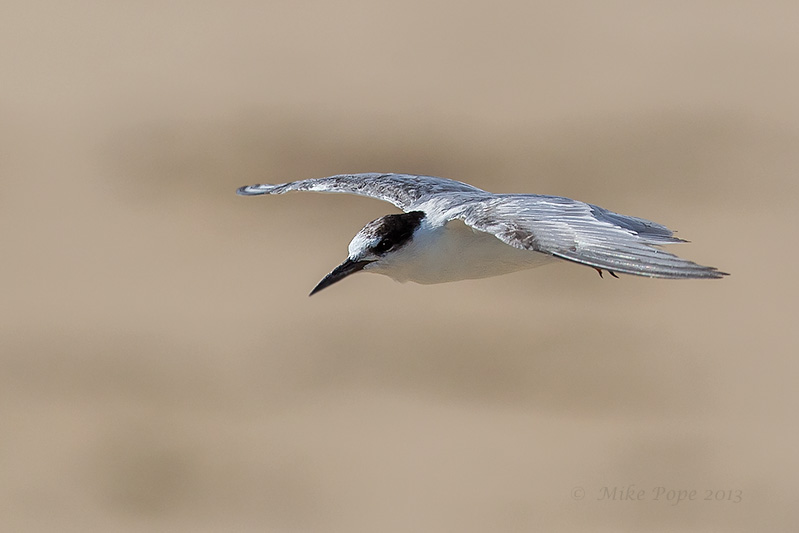
and White-cheeked Tern


Juvenile White-cheeked Tern (Chlidonias leucopterus)
On the way back to the jetty, we found a small flock of mixed waders on the beach; Common Greenshank


Common Greenshank (Tringa nebularia)
Grey Plover


Grey Plover (Pluvialis squatarola)
a single Greater Sand Plover (possibly a different sub-species, as this had a thinner bill than others I have seen)


Greater Sand Plover (Charadrius leschenaultii)


and around 4 Lesser Sand Plovers and another Greater Sand Plover (this one with a shorter, thicker bill than the one above) which were good to see


Greater Sand Plover (Charadrius leschenaultii)

Lesser Sand Plover (Charadrius atrifrons)


10 October 2013

Qaruh Island

Week 39, 27 September 2013 - Qaruh Island

I have changed the layout of my Blog page to show the post processed images at full size - I think it looks a lot better (thanks Jonathan).

We were fortunate to be invited to join the BioE turtle team on a trip to Qaruh Island to check on the many Green Turtle nests. This was my first trip to this southern island after passing Umm Al Maradim which is a little further south of Qaruh, but also closer to the mainland.

Qaruh is the smallest (275 x 175m) of the nine islands of Kuwait but is also the furtherest (37,5 km) away from the mainland. Of interest, Qaruh was the first part of Kuwaiti soil that was liberated from Iraq during the Gulf War on 21 January 1991.


Coming in to Qaruh Island
Fortunately we traveled with the Coastguard, as we had a stiff breeze with big swells by Arabian Gulf standards, so it made the crossing to Qaruh a little more comfortable.
Maneuvering to the dock
On the way out of Khiran Harbour, we enjoyed the customary Socotra Cormorants roosting on the marker buoys.


Socotra Cormorants (Phalacrocorax nigrogularis)
Since autumn migration was near its peak, I was interested to see what migrants made use of this very small patch of sand almost 40-km off-shore. On route, I did see a Eurasian Sparrowhawk and 2 Steppe Buzzards flying westerly toward the mainland. I must assume that these species have migrated directly across the Gulf from Iran, since the prevailing wind was a favourable tail-wind for these raptors.

Once we had arrived, off-loaded and settled we quickly explored the island - no hatchlings today. I noted that there was almost no vegetation or habitat on the island, other than 2 bushes at the entrance of Coastguard building. 

There were a surprising number of passerine migrants that had landed and were resting on the island. Today I had attached my smaller 400mm to my Canon, which made it easier to use on the crossing and the island itself. A male Ehrenberg's Redstart was seen around the Coastguard building


Male Ehrenberg's Redstart (Phoenicurus p. sammamisicus)
As was Spotted Flycatcher


Spotted Flycatcher (Muscicapa striata)
and Common Whitethroat


Common Whitethroat (Sylvia communis) 
There were at least 7 Eurasian Hoopoes roosting on the radio tower that stands tall on the island


Eurasian Hoopoe (Upupa epops)


A few Shrikes were seen and most were Red-backed


Red-backed Shrike (Lanius collurio)
Surprising was the number of Wheatear's around the island; I counted around 8 made up of 3 species that included Pied Wheatear. I love the sea as a backdrop to some of these images


Pied Wheatear (Oenanthe pleschanka)
Northern Wheatear 


Northern Wheatear (Oenanthe oenanthe)
and a few Desert Wheatear's


Female Desert Wheatear (Oenanthe deserti)

Male Desert Wheatear (Oenanthe deserti)


Even more surprising was a female Blue Rock Thrush


Female Blue Rock Thrush (Monticola solitarius)


and an Egyptian Nightjar


An out of place Egyptian Nightjar (Caprimulgus aegyptius) 
All too soon it was time to head back in much calmer conditions and the island looked a little different in the late afternoon sun


Qaruh in soft afternoon light
But also we had a pretty good sunset to round off what was an enjoyable day.


The end of a great day 


01 October 2013

JPR Documentary

Week 39, 24 September 2013 - Jahra Pools Reserve (Click to enlarge image)

This morning I was with a film crew led by Faisal to shoot footage for a documentary for KTV on Kuwait Nature; featuring Jahra Pools Reserves for one of the episodes.

The weather was just perfect in the early morning, but by 9am the wind picked up which provided some challenges for the film crew.

I had arrived a little earlier than the film crew, so was able to do some quick birding and get a few images.

With some patience, I was finally able to get the low key backlit image of the Common Kingfisher that I missed previously - so I was very happy with the output

Common Kingfisher (Alcedo atthis)


Unfortunately a shooter had gotten into the reserve, despite the high fences and was trying to shoot some of the migrating Purple Herons (there was a flock of around 11) - luckily he was unsuccessful!

Purple Heron (Ardea purpurea)
As well as some of the Ducks, here part of the large flock of Garganey that are present on the pools

Garganey (Anas querquedula)

I found a Daurian Shrike sitting quietly in the reeds

Daurian Shrike (Lanius isabellinus)


And observed a squabble between territorial Purple Swamphens. Im guessing this years brood now has to find territory away from their parents - luckily there is abundant reed cover, but open pools are slowly shrinking as the reed cover expands at an alarming rate

Territorial Purple Swamphen (Porphyrio  porphyrio)
Whiskered Terns were foraging over the larger open pool.

Whiskered Tern (Chlidonias hybrida)


Here are two old Dragonfly pupae on the fence post

Old Dragonfly Pupae

That's a wrap!


Birds and Hounds

Week 38, 19 September 2013 - Sabah Al Ahmad Sea City (Click to enlarge image)

Today I headed south to Sea City near Khiran and spent most of the morning on a boat as my mode of transport. Migrants are not as abundant in the south as they are in the north.

However, I did find an early winter arrival in the form of a Caspian Gull

Caspian Gull (Larus cachinnans)
A juvenile Little Tern was seen on the lagoon beach and I must say their numbers in the south have been down, as compared to previous years

Juvenile Little Tern (Sternula albifrons)


A distant flock of 7 migrating Glossy Ibis was a new species for me in Khiran

Glossy Ibis (Plegadis falcinellus)
The undoubted highlight was watching a Western Osprey hunting (unsuccessfully) in the lagoons of the Sea City project - it is just a magnificent, bold looking raptor.

Western Osprey (Pandion haliaetus)


Whilst on the boat, we spooked a good number of Hound Needlefish (I really like their scientific names!) which lept out of the water and often tail-walked for quite a distance and at quite a speed. I took this as a photographic challenge, not that a naked 600mm was the best lens to choose for this exercise (the 400mm would have been far easier to handle). This few images were the best of my attempts, but for sure I will try again with a more appropriate lens.

Airborne Hound Needlefish (Tylosaurus crocodilus)

Hound Needlefish like a bullet at high speed

They just explode out of the water

Tail walk
Once off the boat, I checked out some other areas finding a Little Egret hunting in the main trench

Litte Egret (Egretta garzetta)
As well as Common Redshank, which is generally more uncommon in the south than it is in the north.

Common Redshank (Tringa totanus)